
How an Industrial Roller Shutter Is Specified
This page sets out the specification side of industrial roller shutters — slat gauge, guide depth, drive type and what suits a given opening. If you already know what you need and want pricing, see industrial roller shutter doors for sale.
An industrial roller shutter is a specification exercise before it is a purchase. Two doors that look identical from the yard behave completely differently once one of them is cycling twenty times a day with a forklift crossing the threshold. What follows is how we work out what a given opening actually needs.
Every decision here is made on site. We measure the clear structural opening, the lintel height, the headroom above it and the side room on each jamb, then check what the surrounding structure will carry. Only then is the door manufactured to size.

Slat Gauge, Guide Rails and Barrel
Slat gauge and profile. The single biggest determinant of how long an industrial door lasts. A light curtain in an industrial opening bows under wind load and deforms on the first knock. We step the gauge up with the span, and use a deeper interlocking profile on wide bays.
Guide rail depth. The rails hold the curtain in place under load. Shallow guides let a wide curtain pull out in wind or after a strike; deeper guides keep it engaged. This is the detail most often trimmed to win a quote, and the one that generates the most callouts afterwards.
Barrel and headroom. A heavier curtain rolls to a larger diameter, so the barrel needs more headroom above the lintel. Where headroom is limited we change the slat profile rather than force a barrel into a space that cannot take it.
Bottom rail and floor line. Industrial floors are rarely level. We set the bottom rail to the actual floor line so the door seals across its full width instead of resting on one high point.
Drive Type: Chain, Motor or Both
Chain gearing. Manual geared operation for heavy curtains, with no reliance on power. Chain operated roller doors are the dependable choice on wide bays, and in units where a power failure would otherwise leave the door shut.
Motorised. Faster and easier where a door is cycled repeatedly through the day. The motor has to be sized to the curtain weight and the expected cycle count — an undersized motor is the most common cause of premature failure we are called out to. See industrial roller shutter door motors.
Both. Most motorised industrial doors should keep a manual override. We fit one as standard where being unable to open the door is a business risk.

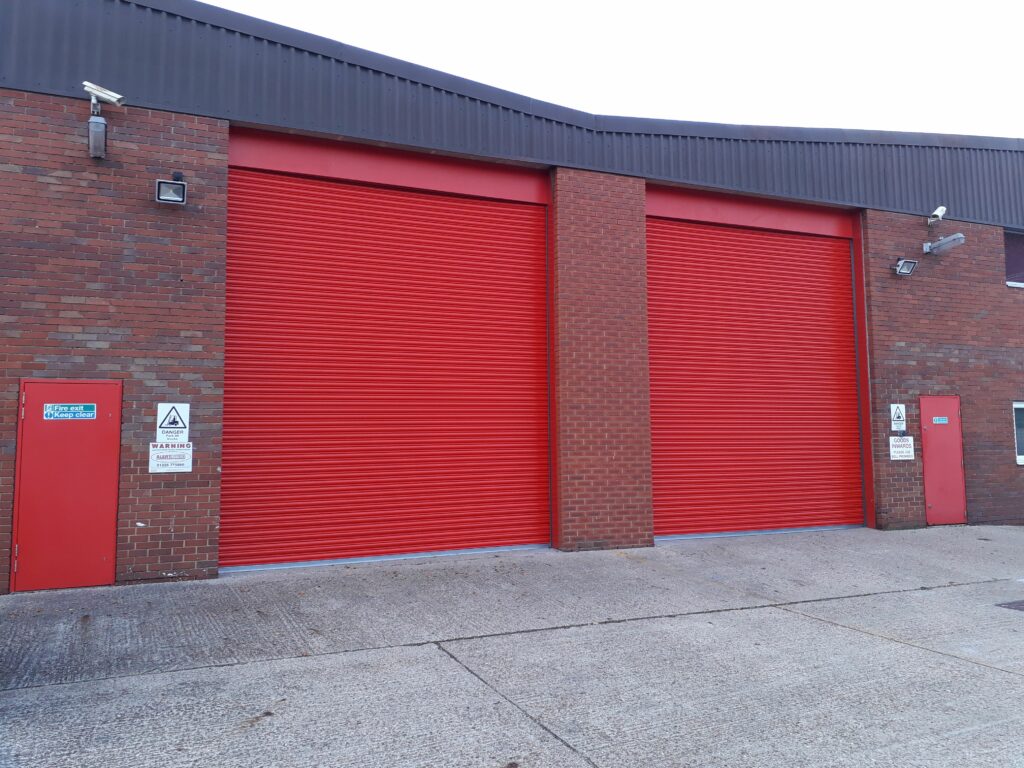
Matching the Door to the Opening and the Environment
Coastal exposure. Anywhere near Table Bay or False Bay, salt air finds untreated steel. Galvanized roller doors are the baseline; powder-coated roller doors add colour over that protection.
Impact and traffic. Openings with forklift traffic need a bottom rail and guide detail that survives a strike, and an approach angle that stops it happening again next week.
Wind loading. The south-easter puts real pressure on a large curtain. Span, gauge and guide depth get decided together, not one at a time.
Visibility and ventilation. Where a unit needs airflow or sightlines while secured, perforated roller doors do that without giving up the lock-down.
Request a Free Quote
Do You Need A Roller Door?
Get A Free Quote
Proudly Serving Cape Town & Surrounding Areas
We supply and install industrial roller shutters throughout Cape Town and surrounding areas:
Roller Shutter Doors Gatesville | Roller Shutter Doors Woodstock | Roller Shutter Doors Ottery | Roller Shutter Doors Claremont | Roller Shutter Doors Rondebosch | Roller Shutter Doors Mitchells Plain | Roller Shutter Doors Parow | Roller Shutter Doors Bellville | Roller Shutter Doors Kenilworth | Roller Shutter Doors Mowbray | Roller Shutter Doors Camps Bay | Roller Shutter Doors Sea Point | Roller Shutter Doors Milnerton